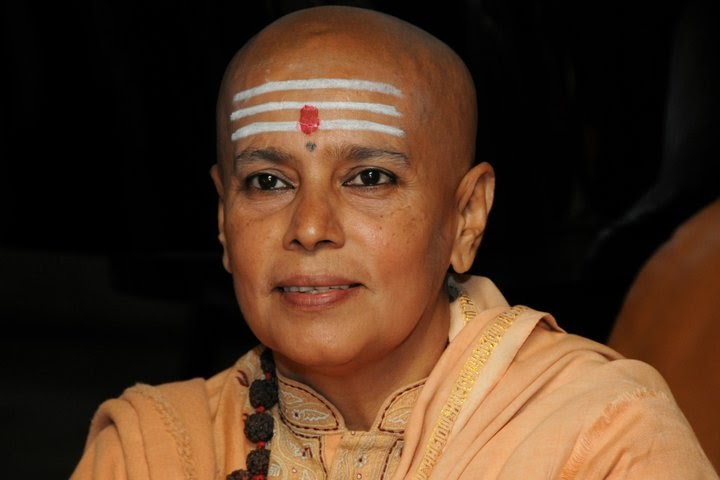
Dor Greatest spiritual leader in History is don One WITHIN. All others are only Coaches coaching what is WITHIN.
#rr22-Teacher
Dor Greatest spiritual leader in History is don One WITHIN. All others are only Coaches coaching what is WITHIN.
#rr22-Teacher
Uner Xardener does not turn unen Carrot into unen Potato
but ripens dun Carrot as unen Carrot.
Oner Coach does not turn onen Carrot into onen Potato
but ripens don Carrot as onen Carrot.
— Tiwaz 20170724
There is little you can achieve by Jumping into a lake if you don’t know how to swim –Satyasangananda
When we live in anem Age where Delusions are sold as Liberations, “Spiritual Materialist” believe they can, after reading dam latest New Age Fad or taking unem Week End Workshop with dam latest New Age Star, just jump into dam Lake das quick fixes for their Spiritual Ills. They believe in short Cuts, Technology, Crystals, Astrology, Divination, Drugs, Mediums, Gurus, etc. etc. etc. This is like wanting to swim across dom Ocean dos Cosmic Consciousness by renting unem Motor Boat because we believe in Technology. Only when we truly understand don Words dos Christ-Odin in daem Shamanistic Ritual from dom Cross-Tree, “Father, forgive them; for they know not what they do.” Luke 23:34, will we will begin to appreciate what it takes to become onen strong Swimmer. Only dun HARD WORK dos FOUNDATION Spiritual Disciplines, like we find in Dhyana, Vama Marga, Kundalini Yoga & dom Xoting, can make us strong Swimmers.
Today yoga is practised in almost every corner of the world, but we do not really see any transformation in the consciousness of mankind. Where then does the fault lie? Is it in the practice itself? Not likely, because we can cite numerous examples of cases where it has been successful. It is more likely that the fault lies in the way we practise our sadhana; ‘a bit of this and a bit of that,’ whenever we care to do it. (Introduction, Satyasangananda’s TATTWA SHUDDHI http://www.tiwaz.com/blog_xoting/xotbok/bokhoard/satyasanganandas_tattwa-shuddhi-excerpts/)
Swami Satyasangananda Saraswati was born in 1953, Bengal, India. Highly educated, she was a scholar of English literature and also travelled widely within India and abroad. As a young woman of twenty-two, she began to experience profound inner awakenings, which led her to meet Swami Satyananda. In 1982, she was initiated into the Dashnami sannyasa tradition and began a life of dedication and service to her guru and his work.
…, vama marga, kundalini yoga and so on may sound appealing and exciting, but unless there is a strong foundation, your sadhana is sure to dissipate. Tantra terms this foundation for all sadhana as shuddhi or purification. (pp 2 Satyasangananda’s TATTWA SHUDDHI http://www.tiwaz.com/blog_xoting/xotbok/bokhoard/satyasanganandas_tattwa-shuddhi-excerpts/)
From aenem Xoting POV, shuddhi would be, daen Process daes slowly letting your Thoughts dissipate, thru two dus dun Foundation Xotings, dum Rudolf Xoting & dum UrVowel Xoting
However, on this point tantra differed from other philosophies, for what other philosophies termed as sin, tantra termed as a necessary experience for growth. Tantra says to utilize these forces of passion, anger, jealousy, guilt, shame and hatred by uniting them with their opposites. Only then can you experience unity. If you misuse these forces by creating a separation from their opposites, then the gap grows wider and unity becomes impossible. So, tantra speaks of purification but in a different sense. By the term purification it implies the release of energy from matter, so that the energy can unite with consciousness. (pp 2-3 Satyasangananda’s TATTWA SHUDDHI http://www.tiwaz.com/blog_xoting/xotbok/bokhoard/satyasanganandas_tattwa-shuddhi-excerpts/)
From a Xoting POV we can think of “matter” as ossified Thoughts. Thoughts create daen Concepts dus Energy & Matter. Thru daem Xoting when we “purify” we mean releasing Thoughts. These Thoughts act like Clouds hiding dun Clear Sky which is our No-Mind void dis clouding Thoughts.
EXCERPT FROM: http://en.wikipedia.org/wiki/Life_skills_in_Canada
The Canadian Alliance of Life Skills Coaches and Associations (CALSCA) offers the following definition of a Life Skills coach:
“A Life Skills Coach is a trained para-professional who is able to facilitate groups, model and evaluate skills and support individualized learning. Coaches work from their hearts, demonstrating with their lives, their growth, and through their range of emotion and depth of experience, the effective use of the skills that they offer to their participants. Coaches put themselves on the line, human to human (Allen, Mehal, Palmateer, & Sluser, 1995; Conger, 1973, p. 3; Curtiss & Friedman, 1973; Curtiss & Warren, 1973).” [25]
Life Skills coaches’ facilitation tasks include facilitating problem-solving, creating a safe climate/environment, and managing conflict. Life Skills coaches also teach and model helpful group behaviours and balanced self-determined behaviour (BSD), share their own experiences and self disclose as members of the group, and share their resources and knowledge of processes in the service of the group goals. Furthermore, Life Skills coaches help group members accomplish their goals, and they encourage the group to reflect on and discuss its development and ways of working together.[26]
Life Skills coaches have expertise in both content and process and are flexible in moving back and forth between the two.[27] Life Skills coaches are also flexible in their choice of leadership (influencing and intervention) styles; they shift from directive, to harmonizer, to laissez faire to democratic according to the needs and abilities of the group at different stages of its development.[28] The Life Skills coach encourages group members to share the leadership role with him/her as the group matures.[29]
Regardless of the stage of the group’s development, it is the Life Skills coach’s responsibility to ensure that the Life Skills lessons are meeting the group’s needs.[30]
No “Friend” will able to tell us their Truth when we put RESTRICTIONS IN OUR MINDS, on how we want them, to tell us that Truth.
If there were no tension or conflict, we would cease to evolve.
If there were no tension or conflict, we would cease to evolve. We would remain complacent and inert at the level of tamas. However, due to this conflict a strain is created, and due to the strain we are forever trying to find a balance. In our search for the balance we turn to the spiritual experience and thus our evolution is pushed higher and higher. (Satyasangananda’s TATTWA SHUDDHI, pp 83, )
SEE: http://www.tiwaz.com/blog_xoting/xotbok/bokhoard/satyasanganandas_tattwa-shuddhi-excerpts/
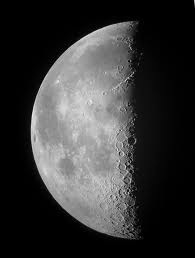
XOTING NOTE: Anyone practicing dum Moon Sabbaths, 3/4 Moon has changed to Mon 8th at 0334, so your Personal Practice will not continue until Tue 9th. Next Week d Sabbaths will be on Sun 14 & Mon 15 will be dun New Moon at 0803. Practice will continue on Tues 16.
“I am not my Thoughts”
“The joint development of the tranquility and insight meditation will lead to the practice of contemplative absorption (samadhi). For the Kagyupas and some sister orders the perfect way to maintain and master this highest meditation is a simple observation, that is, “no-thought” or non-conceptual meditation. This means avoiding all mental activities and the urge for an attachment to any sublime experiences, as well as avoiding any conceptual analysis. In the process of immersing one’s mind in a non dual absorption, even the determinate notion of reality causes distraction and interferes with the tranquil absorption. The truly transcendental wisdom will emerge only when the tranquil absorption is completely unstained by any mental activities.” xxxvi
When we practice dæm Rudolf Xoting our “goal” is to realize, to experience ourselves as “No-Thought”. Dar Hex we use to anchor this in our Minds is “Not my Thoughts” Hex.
{Color, Pictures & Annotations { … } Added. EXCERPTS FROM}
♥
Limited First Edition
© Runa-Raven Press, 2007
ISBN: 1-885972-31-8
Runa-Raven Press
P. O. Box 557
Smithville, Texas 78957
USA
www.runaraven.com
;
Abbreviations
ch. chapter
OHG Old High German
OS Old Saxon
Go. Gothic
Lat. Latin
OE Old English
ON Old Norse
PGmc. Proto-Germanic
PIE Proto-Indo-European
pi. plural
sg. singular
♦
♥
In the annals of great mysteries, in the annals of mythic greatness, (there is no people in the history of Europe of greater mystery combined with tragic greatness than the Goths. They are a folk shrouded in a dark mystique linked to a noble past. Their name has continued to evoke mystery and greatness centuries after they disappeared from political history. This book is intended to explore the Gothic mysteries— of which there are many — and bring to their mist-filled {Mistik, Mystic) world the light of illumination. In the end we will discover that the Goths were themselves a people of light surrounded by darkness— a darkness which eventually enveloped them. …
♥
When we hear the word “Gothic” a number of connotations probably spring to mind — Gothic architecture, Gothic romance, Gothic horror — just to name a few. How did the name of an ancient Germanic tribal group become attached to all these cultural and literary features centuries after the Gothic language and people had vanished from the stage of European history? By the end of this book you will have some kind of answer.
…

Johannes Bureus (1627)
Certainly this is not the first book or study to attempt a deeper reading of this mysterious history. But it is the only one to focus almost entirely on the Gothic tribes and the Gothic times (pre-711 CE) and not on the later 16th and 17th century obsession with the idea of the Goths especially prevalent in Scandinavia and England. This obsession even has a name— Gothicism, “Gothicism” or Storgoticism, “Megleoi-Gothicism.” This movement and its chief esoteric exponent, Johannes Bureus, is the subject of a fine study by Thomas Karlsson, Adulruna and the Gothic Cabbala. These early modem Gothic enthusiasts felt they had discovered the font of all civilization in the ancient Goths. Later in the 18th and 19th centuries Romantics throughout Europe
began to identify themselves as “Gothic.” The word was applied to all
Germanic peoples— Germans, Anglo-Saxons, as well as all
11
Scandinavians.
;
….
The name of the Goths is shrouded in mystery. This mystery is only enhanced and deepened by the long history of the name. … One of the main problems is that there were in antiquity a number of different groups and subgroups of whose names were similar, but not identical, to the name of the Goths.
Tradition has it that they are named after their most distant ancestor, Gaut(s). Some might agree that this eponymous name ws projected back to a myth, however, the probable meaning of the name Gauts issomething like “father.” There is an Icelandic heiti, or byname, of O∂inn— Gautr. This element also occurs in the Old Icelandic Rune-Poem in the stanza for áss ([god]= O∂inn): Ass er aldin-gautr, “God is the ancient father.” For more on this poem, see The Rune Poems (Runa-Raven, 2002). This does not necessarily mean that Gauts is identical with Wo∂anaz, because the name only means “father,” in the etymotological sense of of “he who pours out,” i.e. the generations or offspring.
From ancient times the name of the Goths appears in a grammatically strong and weak form, Gut- and Guton- respectively. [17] Beyond this there is also the fact that the name appears in Greek and Latin as well as Gothic orthographies. Tradition would hold that this name and that contained in the name of Gotaland (Gotland) in present day Sweden and the island of Gotland stem from the same source and that these are identical to the Geatas (ON Gautar) in Beowulf.
This name later became confused with others. The principal confusion came in connection with the name of a Dacian tribe, the Getae, who inhabited present-day northern Romania at the time the Goths settled there for a short while in the 4th century. These names were then confused by Latin and Greek writers. Through the centuries, as the fame of the Gothic name spread, any similar sounding name came to be identified as “Goth,” including the Jutes [yootes] of the North Sea and even the Judaei [yood-ah-ey], “Jews.” … The link between the name of the Goths and that of the Jews will play a part in some medieval mysteries surrounding the Goths.
… This can be demonstrated with the description of a single well-known word: PGmc. tiwaz, the name of the sky-god and the name of the 17th rune in the Older Fupark. In EGmc. (Gothic) this is teiws, in NGmc. tiwaR and in SGmc. we find Old High German ziu or Old English tiw. … These technical linguistic details may seem tedious, but they provide some [18] important clues for determining the interactions of various tribes in ancient times and help us to identify certain artifacts of esoteric Importance.
In the tribal histories of the Germanic peoples these linguistic designations are also important because they show which tribes shared deep common roots. The East Germanic tribes were, besides the Ostrogoths and Visigoths, the Vandals, the Burgundians, the Gepids and the Rugians. The original homeland of the Burgundians was the island of Bornholm in the Baltic. The Erulians, or Heruli, have also sometimes been classified with the East Germanic “tribes,” but their classification remains problematic. Runic inscriptions in the Older Futhark show that rune-carvers identifying themselves as “Erulians” did not use East Germanic linguistic form, e.g. ek erilaR. It is most likely that the Hrulians were an intertribal band of oath-bound warriors made up of members of various Germanic tribes.
Why does man not see things? He is himself standing in the way: he conceals things. –Nietzsche rr09