Latest Entries »

Today’s Evil Might
Is hidden in d Light
–Tiwaz 201103311431 rr23auu

Kimberly Ann Hart: So, what do your codes mean? I can see a date in part of the code… but what does the rest mean?

Tiwaz Schneider: rr23auu means:

– rr means Runa Reading
– 23 means d 23 Runa Staff of d Elder Futhark – Dagalaz Literally probably means d God of Day in Day & Night. Something maybe like Abraxes.
– “a” represents d Runa Staff Ansuz. Esoterically it represents d Archetype Level.
– “u” represents d Physical Level.
– “au” would represent Thoughts manifesting Action.
– “uu” represents that I have personal Experiences of this.

The outward man is the swinging door; the inner man is the still hinge. –Eckhart rr10eeo

“Kunst ist eine Vermittlerin des Unaussprechlichen; darum scheint es eine Torheit, sie wieder durch Worte vermitteln zu wollen.“ – Goethe rr04ouh

(“Art is a mediator of the inexpressible, so it seems a folly to give them back with words.” – Goethe)

Every Word is a Brick
That keeps us in Jail
No-Thought breaks
Us Out without Fail
–Tiwaz 201103251559 rr13auu

ÆÆner ur Stage of dom Xoting is dæn No-Thought. ÆÆt can be reached thru dom Rudolf Xoting.

PAGES FROM: Spring Healing Arts Fair 2011

Life Skills Coaching using Rune Stones – with Tiwaz

Tiwaz Schneider, CERTIFIED LIFE SKILL COACH using Rune Readings, similar to Jungian Art & Drama Therapy, giving direction in your everyday life by keeping you focused on your spiritual will “ToBe”

Welcome to the blog for Angela & Dee’s ‘Spring Healing Arts Fair!’

On Sunday, March 20th, our holistic health-market will introduce you to a variety of quality alternative, traditional, holistic, natural, and transformative ways to approach your healing and health.

Have you always wanted to try acupuncture, reiki, or shiatsu~?

Now’s your chance to get a sample (20minute) treatment of a variety (15+!) of modalities, at a fraction of what the practitioners normally charge.

The intention of this event is to connect people who are interested in holistic health with an assortment of tools, services, and inspirations to plant seeds for health and vitality!

When: Sunday, March 20th 12-5pm (free yoga 10-11am’ potluck dinner 5:30-6:30pm)
Where: The Inner Garden, 401 Richmond street, Suite #384
Admission: $20 (Includes 20min. treatment) Bring a friend for $35
~ Each additional treatment: $15 each ~ Five Treatments: $60
~~~~~~ $5 off for advance tickets (paypal)~~~~~~~

This healing-fair will be followed by an immensely powerful sound-healing performance with Darren Austin Hall and his crystal bowls! ($20 at the door).

For more info, contact Angela or Dee ~ amaleo81@hotmail.com or call 416.550.4137

~~~ Come join us, and take your health into your own hands! ~~~

XOT (Gothic Runik English) Language:

The Younger Fuþark. Danish long branch, swedis...
The Younger Fuþark. Danish long branch, swedish/norweigan short twig and latin letters.

“Xot” stands for a people [see “Goths are not Pagans“] & as a language. Xot as a language is a spiritualized English for a northern European spiritual tradition, that is unfolding in the “NOW”. Xot does this by reinvigorated Modern English by re-connecting ancient RUNIK and modern Xotik (Gothic/Germanic) elements in a kind of Jungian Alchemical Cauldron. It is important to remember that Deutsch (German) and English, as does many of the other Languages in Europe, have the same roots in the UrXotik (Germanic) Family. The earliest Xotik texts are third century AD runic inscriptions. Slowly as Rome and especially Judeo-Christianity merged with the Xotik People they introduced Latin as a means to further their power over the Xots. The Xot Language is a reversal of this “Spiritual Colonization” so that it can better express the “Xoting” (spiritual unfoldment) towards “XotHood” (cosmic consciousness, enlightenment) in the NOW.


CAPITALS

One feature of Xot is that as in Deutsch (German) it capitalizes it’s Nouns which we will do from now on in this Page, that is Capitalize all Nouns.

Being revised.

CASES

Another Feature is that Xot reinvigorates the Cases in English using Deutsch Elements.

“r” stands for the Subjective Case as in “dur Boy” (the boy)
“n” stands for the Objective Case as in “Dur Boy reads dun Bok.” (The boy reads the book)
“m” stands for the Dative Case as in “Dur Boy reads dun Bok in dum House.” (The boy reads the Book in the House)
“s” stands for the Possessive Case as in “Dur Boy reads dun Bok dus Father in dum House.” (The boy reads Father’s Book in the House)

VOWELS

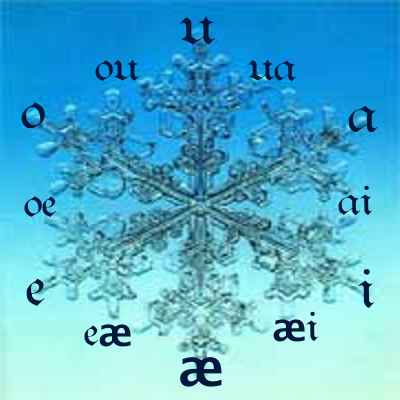
rr09 Voweled Snowflake

rr09 Voweled Snowflake

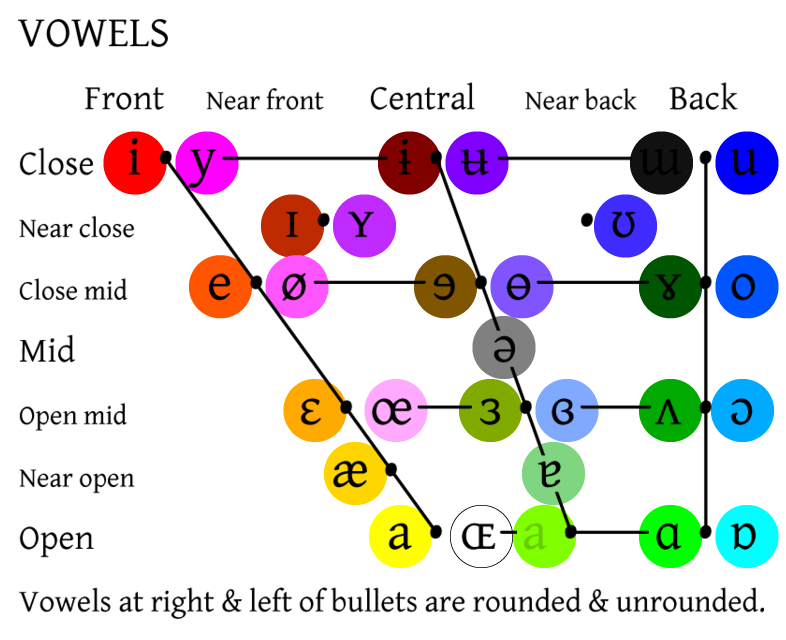
A main Feature of Xot-English is that it uses the Six Primary Runik Vowels as indicators of States of Consciousness especially in it’s Pronouns and Articles. Like a Snowflake or the Structure of Water the Vowels create a VISUAL HEX. When they are voiced they are an ORAL HEX or a HEX XALDOR.  When the Vowels are single they are Short Vowels. When they are doubled they are Long Vowels. It is important to Remember these act as Point of Views (POV). These Vowels indicate the POV that the Author wants the Reader to understand the Word in.
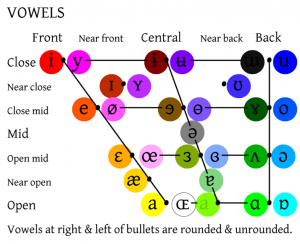
IPA VOWELS IN COLOR

IPA VOWELS IN COLOR

[I:][u:]


[e:][o:]


[ae] – [ɒ]


 HOD STATES (/hod/ from hood as in neighborhood, Godhood, meaning states of consciousness)

u [u] stands for dun Du-State, dun Physical State
[u:] as in cool, Luke, pooled, Fool.

a [ɒ̹] stands for dan Da-State, dan Dream / Emotional / Archetype State
[ɒ] as in hot, awsome, Xot, caught, God

i [i] stands for din Di-State, din Simple/Robotic State
[I:] as in see, me, to be, free

æ [æ] stands for dæn Dæ-State, dæn Reflective / Concentration / Dharana State
[ae] as in fat, Cat, at, Bat

e [e] stands for den De-State, den No-Thought/ Synchronicity/Dhyana State
[e:] as in May, play, eh, Fable.

[o] stands for don Do-State, don Holistic State / Xothood / Samadhi State
[o:] as in old, Joe, sold, Soul.

NOTE: u, a, o, are “round Vowels” pronounced with the Mouth Open and Round. i, æ, e are “smiling Vowels” pronounced with the Mouth in a Smile

see also FUTHARK RUNIK XALDOR

LONG VOWELS: Long vowels emphasize what you are experiencing or have experienced. Although we may experience several things in a Sentence we may want to emphasize only one experience in that Sentence.

EXAMPLES:

“dur Boy” means the Physical Boy.
uner Boy” means a Physical Boy.
“duur Boy” means the Experiential Physical Boy that we are seeing or have seen.
“dar Boy” means the Dream Boy. It is used mainly when we are talking about Dreams but could also have the Connotation of a “Dream Boy”. If we want the Reader to understand we actually mean a Dream, we are having or have had, we could say “daar Boy”.
aaner Boy” means a Experiential Physical Boy that we are seeing or have actually seen.
“dir” Boy means the Boy, the Boy which we might not really put much thought to.

FOREIGN WORDS:

As in any Language Xotik English has indigenous Words & Foreign Words.

A rule of Thumb in Xotik English is that it uses Runik Letters for indigenous Words & leaves foreign Letters for foreign Words. Since this Language is still evolving the Writing and Posts are not consistent at this Time.

“c” becomes “k” as in “runic becomes “Runik”

“g” becomes “x” as in “gotic” becomes “Xotik”, “Goting” becomes “Xotinx”, “ground” becomes “xround” but “language” stays “Language” because it comes from Latin. “foreign” also remains “foreign because it comes from Latin.


Any Comments, Corrections or Questions for Clarification are welcome.


*NOTES:

-hood Look up -hood at Dictionary.com
word-forming element meaning “state or condition of being,” from Old English -had “condition, position,” cognate with German -heit, Dutch -heid, all from Proto-Germanic *haidus “manner, quality,” literally “bright appearance,” from PIE (s)kai- “bright, shining.” Originally a free-standing word (see hade); in Modern English it survives only in this suffix.

godhood [ˈgɒdˌhʊd] n

(Christianity / Ecclesiastical Terms) the state of being divine

Collins English Dictionary – Complete and Unabridged © HarperCollins Publishers 1991, 1994, 1998, 2000, 2003

language (n.) Look up language at Dictionary.com
late 13c., langage “words, what is said, conversation, talk,” from Old French langage (12c.), from Vulgar Latin *linguaticum, from Latin lingua “tongue,” also “speech, language” (see lingual). The form with -u- developed in Anglo-French. Meaning “a language” is from c.1300, also used in Middle English of dialects:

Mercii, þat beeþ men of myddel Engelond[,] vnderstondeþ bettre þe side langages, norþerne and souþerne, þan norþerne and souþerne vnderstondeþ eiþer oþer. [John of Trevisa, translation of Bartholomew de Glanville’s “De proprietatibus rerum,” 1398]

foreign (adj.) Look up foreign at Dictionary.com
mid-13c., ferren, foreyne “out of doors,” from Old French forain “strange, foreign; outer, external, outdoor; remote, out-of-the-way” (12c.), from Medieval Latin foranus “on the outside, exterior,” from Latin foris “outside,” literally “out of doors,” related to for1s “door,” from PIE *dhwor-ans-, from root *dhwer- “door, doorway” (see door). Spelling altered 17c. perhaps by influence of reign, sovereign. Replaced native fremd. Sense of “not in one’s own land” is first attested late 14c.
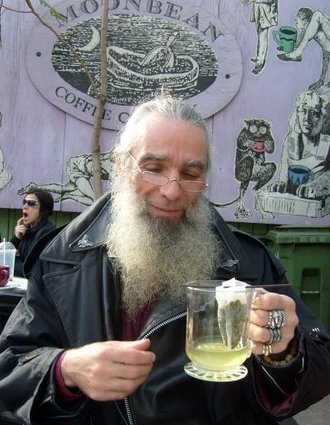
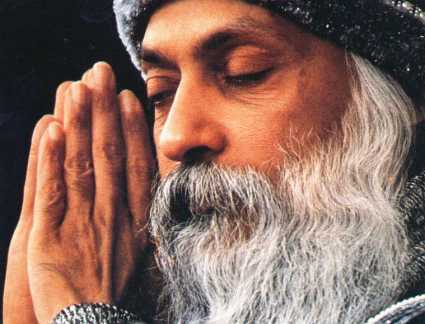
OSHO Meditating

When you realize silent watching, you don’t see any mind anywhere; all thoughts stop. —Osho rr23ææh

Xotik Version

For miæ this “all thoughts stop” is dææn Dæ-State of Consciousness where ÆÆk also realize thææt IIk iim not miæs Thoughts. Sometimes IIk call it No-Thought. In dom Xoting, after struggling with, let us say, diæm Diæ-State, it finally dissipates & IIk iim left without Thought, that was occulting what is. IIt is like waking up, refreshed, throwing off aanem Pile of strangling Spaghetti. What we usually call “awake” is usually for mii diæn Dia-State, Di-State, Diæ-State or Dæi-State of Consciousness. Collin Wilson has called it “the Robot”, Ouspensky “waking sleep”. Today’s English does not lend it self easily to describing these Xoting States, so Æk use dan runic Vowels u, a, i, æ, e, o to give dom Xoting voice. (see Six Primary Runik Vowels)

English Version

For me this “all thoughts stop” is the Dae-State of Consciousness, where I also realize that I am not my thoughts. Sometimes I call it No-Thought. In the Xoting, after struggling with, let us say, the Diae-State, Thoughts finally dissipate & I am left without thought, occulting what is. It is like waking up, refreshed, throwing off a pile of strangling spaghetti. What we usually call awake is usually for me the Dia-State, Di-State, Diæ-State or Dæi-State of Consciousness. Collin Wilson has called it “the Robot”, Ouspensky “waking sleep”. Today’s English does not lend it self easily to describing these Xoting States, so I use the runic vowels u, a, i, æ, e, o to give the Xoting voice. (see Six Primary Runik Vowels)

Deutsch Übersetzung

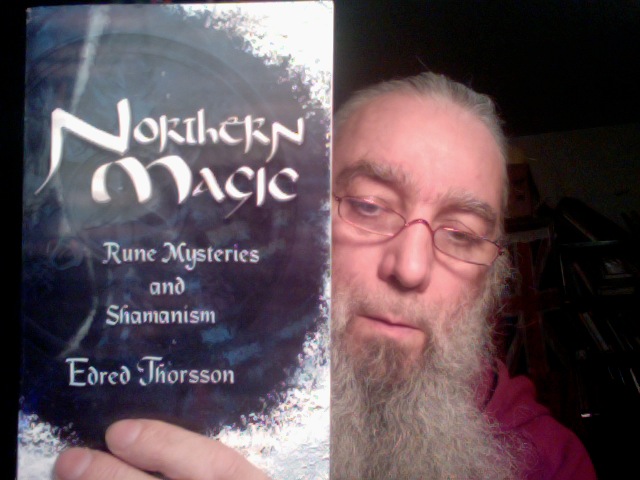
Edred Thorsson's Northern Magic: Rune Mysteries and Shamanism by Llewellyn Publications c1992/1998, ISBN 978-1-56718-709-0

Edred Thorsson, in my Opinion, is dæ Main Authority on Modern Rune Magic. As Stephen Flowers he received his Ph.D. in Germanic Languages and Medieval Studies in 1984 with æ dissertation entitled “Runes and Magic: Magical Formulaic Elements in the Elder Tradition”.

AAk found this Book one of Thorsson’s more “Poetic” Books. Maybe because it deals with da Younger Futhark which was da Futhark that Thorsson was first inspired with until he focused on dæ Elder Futhark & later da “Left Hand Path”.

This Book covers many Subjects. What AAk found most interesting was his Chapters on “Operant Hexology” & “The Germanic Role in the Western Tradition”.

EXCERPTS with Coloring, Links & Pages added.

THE TEUTONS TODAY

From ancient times the Teutons have been known as a group of people who speak the Germanic group of languages. Some prefer the term “Teutonic” over “Germanic” to avoid the confusion between the words “Germanic” and “German.” But in reality the terms “Teutonic” and “German” mean the same thing. The “Gothic” has even been applied to the whole of the Germanic realm, although this too originally referred to only one branch of the Germanic family. Today any of these three terms, Germanic, Teutonic, or Gothic, may refer to the overall tradition of this original group.

The (p.1) English, German, Dutch, Icelandic, Danish, Norwegians, and Swedish peoples are all directly descended from this ancient Germanic cultural stock. It is also important so realize that they left their indelible mark on the cultures of the French, Spanish, and Italian nations, as they founded the first true states in those lands after the fall of the Roman Empire.

The Ostrogoths and Longobards (in Lombardy, northern Italy) founded early medieval kingdoms in Italy. The Visigoths formed kingdoms in southern France and in Spain. There was also on early Swabian kingdom in Spain. The region in southern Spain known as Andalusia is derived from the name of the Germanic people who set up medieval kingdom there, the Vandals. (The original name was Vandalusia.) The Franks eventually settled in what is now northern France and it is from the name of this tribe that the name of the country is derived. In all of these instances the Germanic tribes gave a sense of national identity to the regions in question after the destruction of the Roman Empire.

The Teutons not only had a tradition of religion and mythology unique to themselves, although closely related to their other Indo-European, brethren (Celts, Slavs, Romans, Greeks, Persians, and Indians), bot they also had a unique magical system which has survived in various forms most notably rune magic. (p.2)

(Edred Thorsson’s Northern Magic: Rune Mysteries and Shamanism by Llewellyn Publications c1992/1998,  ISBN 978-1-56718-709-0)

Latest Edition at Amazon

FOCUS ON CHANNELING YOUR INNER MUSES TO MANIFEST

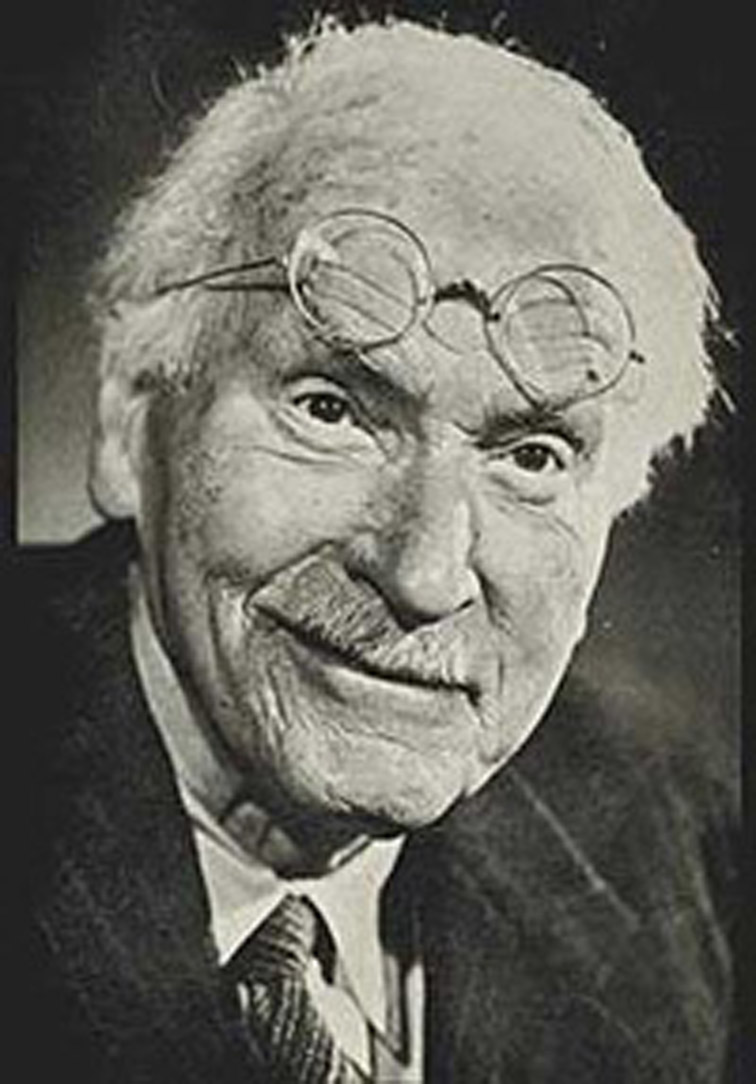
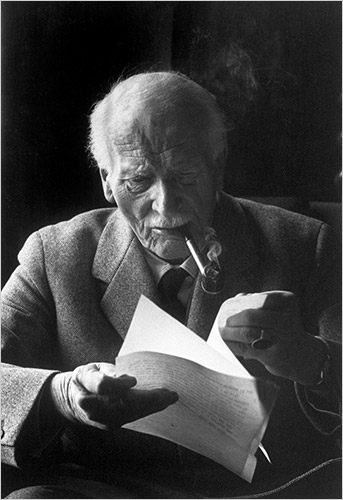
Carl Jung 1875 – 1961 Pioneer in Dream Analysis.

“The artist is not a person endowed with free will who seeks his own ends, but one who allows art to realize its purposes through him. As a human being he may have moods and a will and personal aims, but as an artist he is “man” [[Mannaz, rr20ehh]] in a higher sense – he is “collective man,” a vehicle and moulder of the unconscious psychic life of mankind.” (from ‘Psychology and Literature’, 1930) rr04ouh

Jung’s Understanding of Art’s Purpose, being channeled through dam Artist has a long History. We can see it in Shamanism, Divination, Seances & Neurosises. One Way to look at dæm Difference between anem Artist & anem Neurotic is thæt both are Possessed. Dar Neurotic starts cleaning Door Knobs over & over again while aner Artist continually paints Door Knobs over & over again until another Obsession possess them. We see this Idea of being enem Vehicle for onem HIGHER CALLING in Meister Eckhart, Goethe, Nietzsche, Gaston Bachelard & Heidegger. We can break down great Artists into Three Levels. Dær first Level is dar Artist who can channel his Personal Unconscious. Dær Second Level is dar Artist who can channel his Tribal Unconscious. Dær Third Level is dor one that Mystics like Jung, Nietzsche & Heidegger talk about. This is dor Artist who can channel Art that breaks thru dæn Time & Space Matrix, breaks thru dæn Spell, dæn Hex, rr09æee.

“The great thinker is one who can hear what is greatest in the work of other “greats” and who can transform it in an original manner.” Heidegger’s Nietzche p.35 rr04ouh

Carl Jung 1875 – 1961 Founder of Analytical Psychology a process of integrating d Conscious w d Unconscious

Knowing your own darkness is the best method for dealing with the darknesses of other people.
–Carl Jung rr14iæh